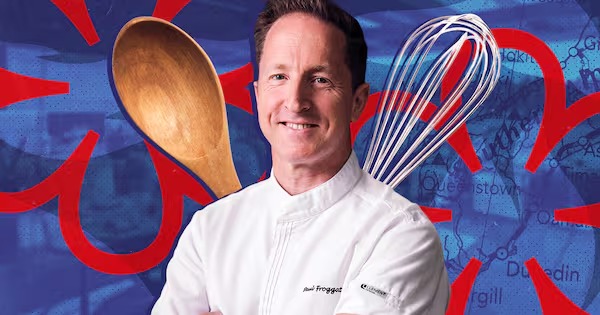
Paul Froggatt's latest 1News profile gives New Zealand's only two-Michelin-star kitchen a more human shape, turning Essence in Queenstown from a luxury-dining headline into a story about craft, producers and hospitality pathways.
Froggatt leads the kitchen at Essence, which Queenstown NZ and Tourism New Zealand identify as the country's only two-star restaurant in the first Michelin Guide to New Zealand. Experience Queenstown says the restaurant was also the first two-star restaurant anywhere in Oceania, with Froggatt running the kitchen as Director of Culinary.
The profile is a credible operator story because it moves beyond the award. Froggatt talks about his UK food memories, the outdoors, family, fly fishing and his respect for New Zealand's local food producers. Asked which group deserves more attention, he pointed to farmers, fishermen, cheesemakers, young chefs and front-of-house teams.
That answer is the real local angle. Michelin recognition can easily become a status symbol for tourism marketing, but a restaurant cannot reach that level without growers, fishers, winemakers, bakers, cheesemakers, dishwashers, hosts and cooks. Froggatt's point reframes the spotlight: the star sits over Queenstown, but the supply chain runs through many hands.
For Queenstown, the Michelin story is also an economic-development story. The resort town already has global recognition for scenery and adventure travel. A two-star restaurant gives it another reason to attract high-value visitors, culinary media and international hospitality workers. That can be positive for local jobs and suppliers, but it also raises expectations around service, accommodation, staffing and affordability.
The profile's most useful contribution is that it makes elite hospitality feel less distant. Froggatt's references to early cooking, family time and everyday food memories remind readers that technical cooking starts with curiosity before it becomes prestige. That matters for young chefs who may see Michelin dining as unreachable unless they already belong to a luxury world.
New Zealand's food story has often been told through raw ingredients: lamb, seafood, dairy, wine, honey and produce. Michelin attention asks a slightly different question: what happens when those ingredients are interpreted at the highest level of service and technique? Froggatt's kitchen is one answer, but the country will need many more pathways if culinary tourism is to deepen beyond a few destination restaurants.
That is where the operator lesson matters. Restaurants like Essence depend on discipline across purchasing, menu development, staff training, service rhythm and guest expectation. The creative work is visible on the plate, but the operating work is what makes that creativity repeatable night after night. Froggatt's profile gives readers a glimpse of both.
The safest way to read the profile is not as a victory lap. It is a reminder that international recognition has to be converted into durable local value: fair careers, stronger producer relationships, better training and restaurants that make New Zealand food more visible without becoming detached from the people who grow and serve it.
Froggatt has given Queenstown a global credential. The wider opportunity is making sure the credential lifts the people around the table as well as the plate on it.