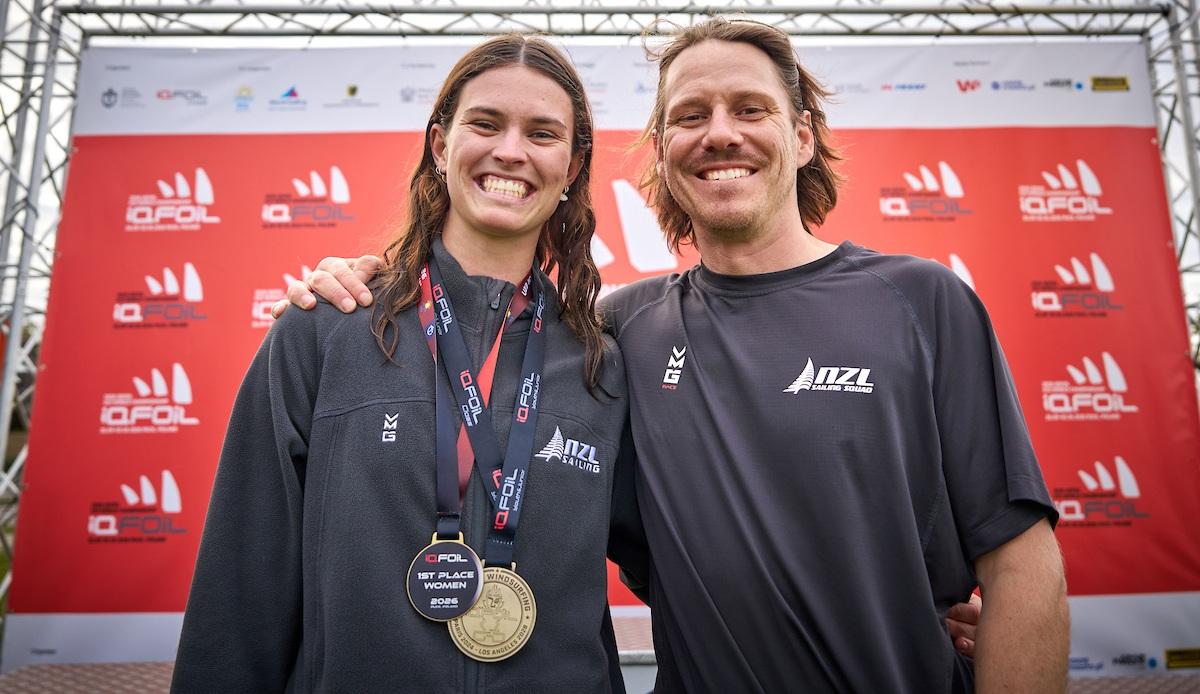
Aimee Bright has given New Zealand windfoiling a major new benchmark, winning the iQFOiL under-23 world title in Puck, Poland, after a dominant qualifying series and a tense final-day finish.
Bright, who sails out of Manly Sailing Club, went into the medal stage as the top qualifier after winning 11 of 20 races. She then had to hold off Norway's Maya Gysler in the final, turning a week of consistency into a world title in one of sailing's quickest and most physically demanding Olympic classes.
The result matters beyond the medal table. iQFOiL is still a relatively new Olympic discipline, replacing the RS:X windsurfer and asking athletes to master a format that rewards speed, tactical control, board handling and the ability to recover from mistakes at pace. For New Zealand, a world title at under-23 level is a sign that the next generation is finding its footing in the class.
Bright's win also carries a familiar family echo. She is the daughter of Olympic boardsailing champion Barbara Kendall, one of New Zealand's most recognisable names in the sport. That connection will naturally attract attention, but the Poland result stands on its own. Bright's week was built on repeated race wins, control across changing conditions and the ability to close when the title was on the line.
For young New Zealand sailors, the performance gives the pathway a clearer point of reference. Olympic classes can feel distant until a local athlete makes the jump from promise to podium. A world title at this level tells clubs, coaches and younger sailors that the route is real, even if the sport itself demands heavy travel, specialised equipment and a steep learning curve.
It is also a useful result for the wider high-performance sailing system. New Zealand has long had strength in boardsailing, skiff sailing and foiling disciplines, but each Olympic cycle resets the competition. Equipment changes, international depth and funding choices all affect who can stay in the race.
Bright's title does not guarantee a senior Olympic breakthrough. It does something more immediate: it puts a young New Zealander at the front of a fast-moving global class and gives the country's windfoiling programme a result it can build around.