New Zealand's Para athletes have turned Glasgow 2026 into a record-setting Commonwealth Games campaign, with Paralympics New Zealand reporting nine medals across ten days of competition. The haul included three gold, three silver and three bronze medals, more than doubling the country's previous best Para sport returns of four medals at both Gold Coast 2018 and Birmingham 2022.
The result gives New Zealand's Commonwealth Games review a sharper Para sport lens. The nine Para medals accounted for a quarter of the 36 medals won by the 112-strong New Zealand team. That proportion is important because it shows integrated Para events were not a side note in Glasgow. They were central to how New Zealand achieved its overall medal performance.
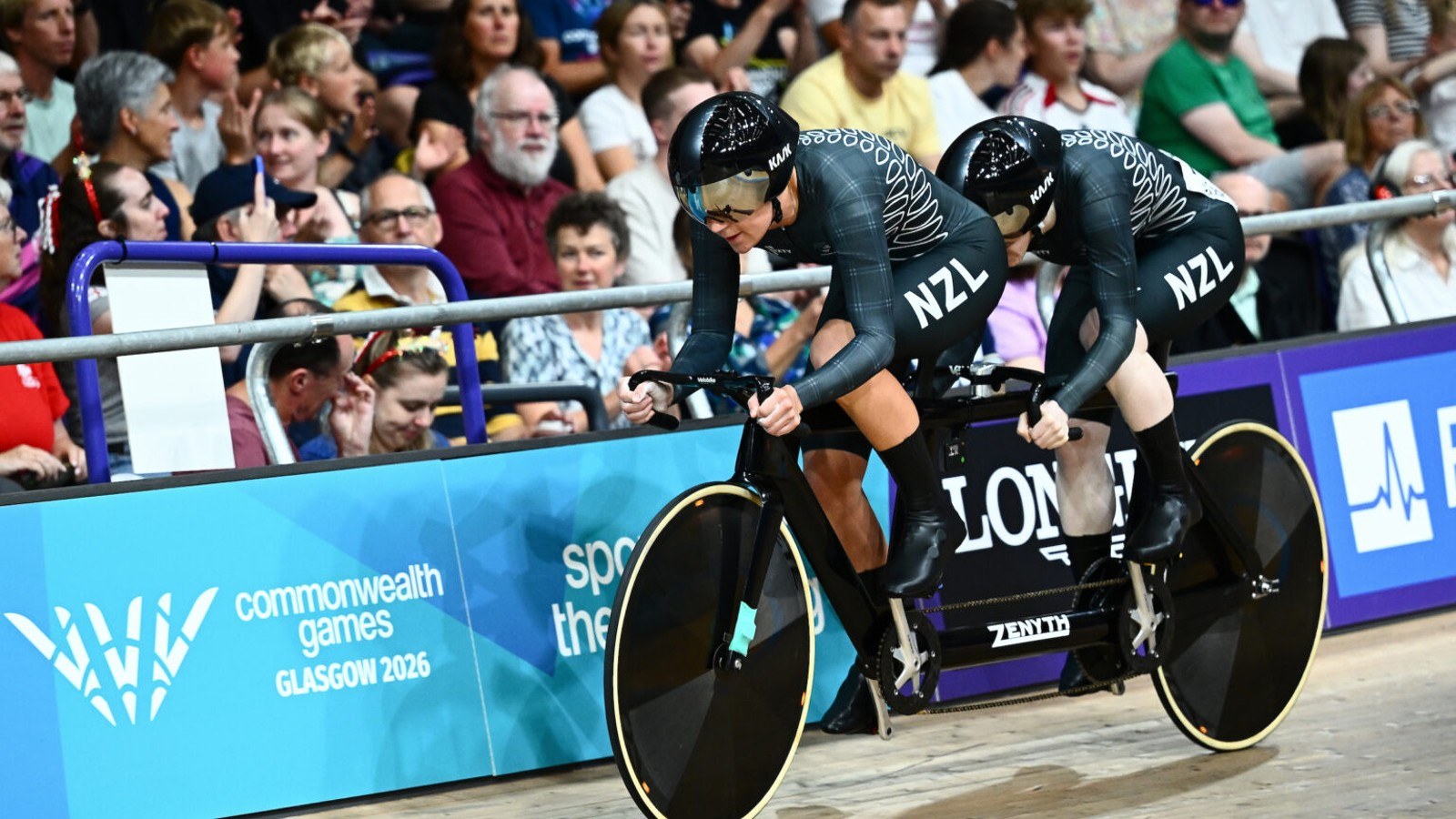
Emma Foy and pilot Jessie Hodges led the way in the velodrome, winning double gold in the women's tandem B sprint and the women's tandem B 1000m time trial. Paralympics New Zealand said the pair showed tactical resilience in the sprint before producing a 1:06.367 ride in the time trial to beat Australia's Jessica Gallagher and Jacqueline Mengler-Mohr by 0.485 seconds.
Devon Briggs added another gold in the men's 1000m time trial C1-3, setting a Games record of 1:05.536. The Cambridge rider also took bronze in the men's 3000m individual pursuit C1-3 after a personal-best qualifying ride and a strong bronze medal race. Nicole Murray added bronze in the women's 4000m individual pursuit C4-5, giving Para cycling five New Zealand medals.
The pool also delivered. Josh Willmer won silver in the men's 100m breaststroke SB9 after competing up a classification. He won his heat in 1:11.99 and returned for the final in 1:11.44, later being promoted to silver after the disqualification of Canada's Fernando Lu. It was his second Commonwealth Games medal after Birmingham 2022 gold.
Para athletics and Para bowls widened the story beyond cycling and swimming. Anna Grimaldi claimed bronze in the women's 100m T47 with a season-best 12.46. In bowls, Julie O'Connell and Teri Blackbourn won silver in the Para women's pairs B6-8, while Kurt Smith and Mark Noble won silver in the Para men's pairs B6-8.
The performance matters for the athletes directly, but it also matters for visibility. Integrated Games give Para athletes a shared national platform rather than a separate audience. When medals sit in the same national tally and the same public conversation, it becomes harder to treat disability sport as an afterthought.
Paralympics New Zealand chief executive Greg Warnecke said the integration of Para sports within the Games programme was a particular highlight and congratulated the Para athletes for world-class performances that continue to change perceptions of disability and what is possible. That point should not be lost in the medal arithmetic.
The next phase is turning Glasgow's visibility into sustained support. Para athletes need classification pathways, coaching, equipment, travel funding, competition opportunities and media attention between major Games, not only when medals arrive. Glasgow 2026 gave New Zealand a record result. The challenge now is to make it a foundation rather than a spike.