A Nelson transport-design business has turned a simple loading problem into a national small-business story, after Goover won the innovation category at this year's David Awards.
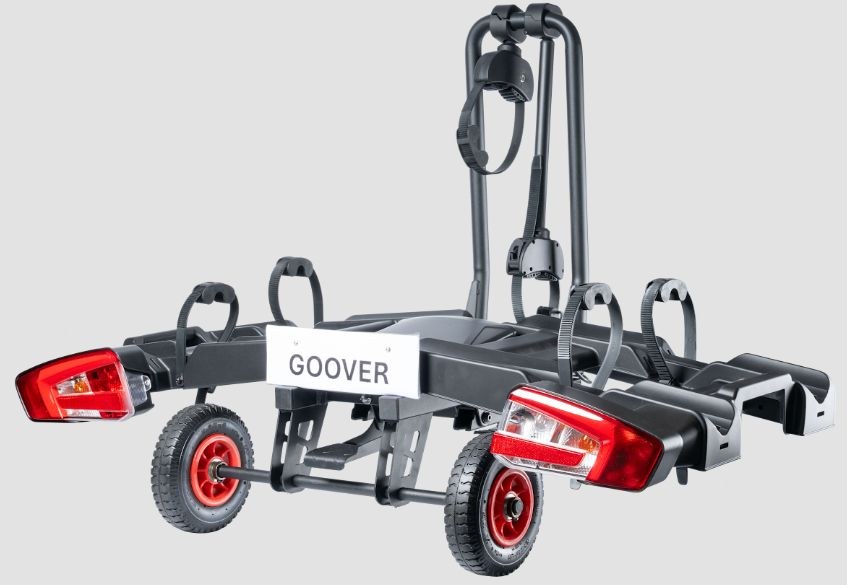
The company makes a lift-free e-bike rack that lets riders load an e-bike at ground level, tilt the rack back, wheel it to the car and push it onto a tow-ball coupling. That sounds like a narrow product detail until the customer base is considered. E-bikes are heavier than conventional bikes, and many of the riders most likely to benefit from them are also the people least likely to want a lifting contest before every ride.
Goover owner Frank Witowski framed the award around problem solving rather than novelty. The company says the rack is aimed at riders who want to keep cycling without having to lift a heavy bike onto a traditional carrier. Its release pointed to more than 100 million riders over the age of 50 globally, while also saying the product is for anyone who wants easier logistics around cycling.
That makes the award a founder-led story with a wider business lesson. Many small New Zealand exporters do not begin with scale. They begin with an irritation that keeps showing up in daily life, then test whether a better physical product can travel beyond its home region. In this case, the irritation is the awkward moment between owning an e-bike and being able to take it somewhere useful.
The David Awards recognise small businesses that punch above their weight through qualities including courage, ingenuity and tenacity. Goover's win sits neatly inside that frame. The product is not a digital platform or a glossy consumer app. It is a piece of gear that has to work repeatedly, safely and intuitively, because customers will trust it with expensive bikes and road travel.
The company says the rack has passed E-Mark and ECE R026 European bike-rack testing. That detail matters because hardware businesses live or die on proof. A clever idea is not enough when it is attached to a moving vehicle. Certification gives retailers, distributors and cautious customers a reason to treat a small brand seriously.
For Nelson, the award is also a reminder that regional innovation often looks practical before it looks glamorous. The same pressures reshaping transport, tourism and recreation are creating openings for smaller manufacturers that understand how people actually use equipment.
Goover's next challenge is the classic one for a niche product business: turning recognition into repeatable sales, distribution and after-sales support without losing the clarity of the original design. The award does not answer that question by itself. It does show that a local founder can still find room in a crowded mobility market by solving a problem riders immediately understand.