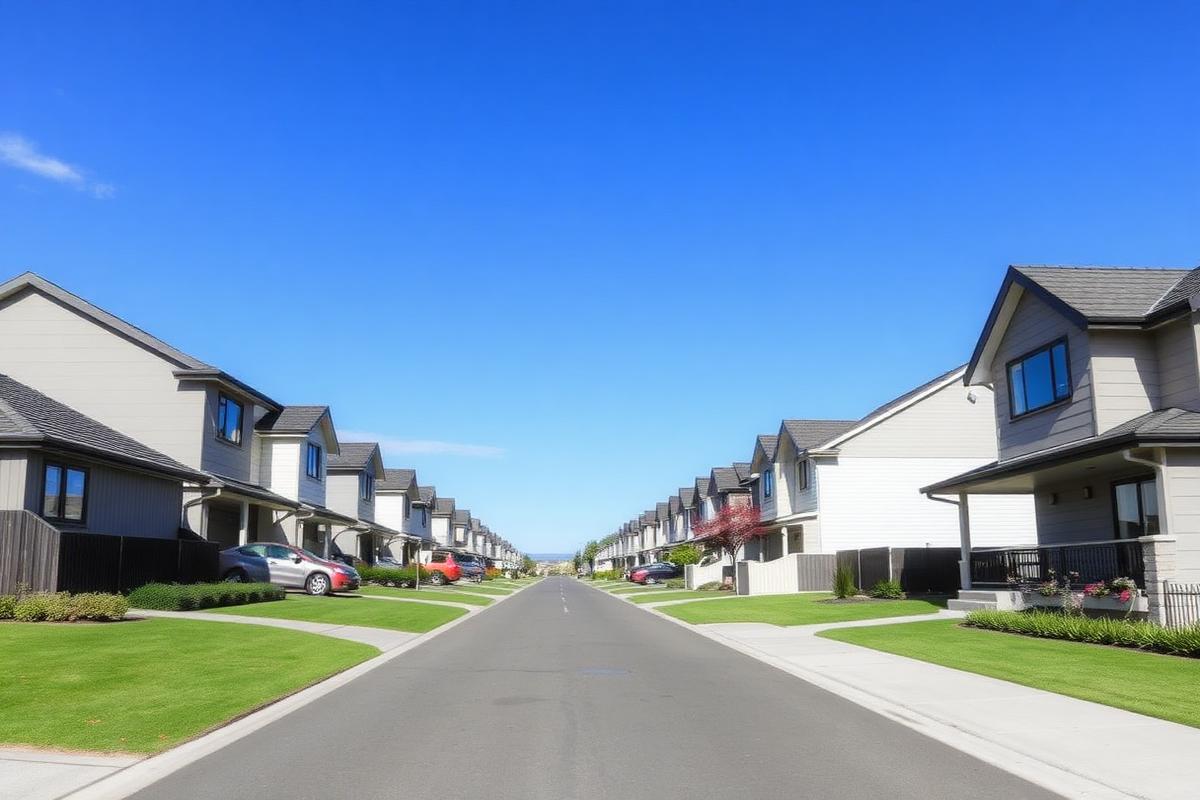

The debate over overheating townhouses and apartments has become a property and health story after officials confirmed comprehensive Building Code changes will not be considered until a later review cycle. Advocates say the delay leaves households living with dangerous summer heat in some newer homes.
The problem is familiar to many residents of compact new-build housing: large west-facing windows, limited external shading, small rooms, little cross-ventilation and designs that trap heat upstairs late into the evening. In one Auckland case reported by RNZ through 1News, a family described upstairs temperatures reaching 35C and an aluminium front door becoming too hot to touch.
The Green Building Council and BRANZ have supported an interim design-stage modelling requirement that would test whether a proposed dwelling is likely to overheat. Supporters say simple modelling could lead to practical design changes, such as less glazing, better orientation, external shading, eaves or ventilation.
MBIE says overheating is technically complex and that any changes must avoid unintended consequences across the building system. That caution is understandable, but the timeline is the political problem. If the issue waits until 2031, thousands more townhouses and apartments could be consented and built before stronger rules are in place.
For buyers and renters, the lesson is immediate. Ask how a home handles summer sun, what ventilation is available, whether external shading is possible, and whether upstairs rooms can stay safe without expensive retrofitted cooling. A warm, sunny home is a selling point only until it becomes a heat trap.