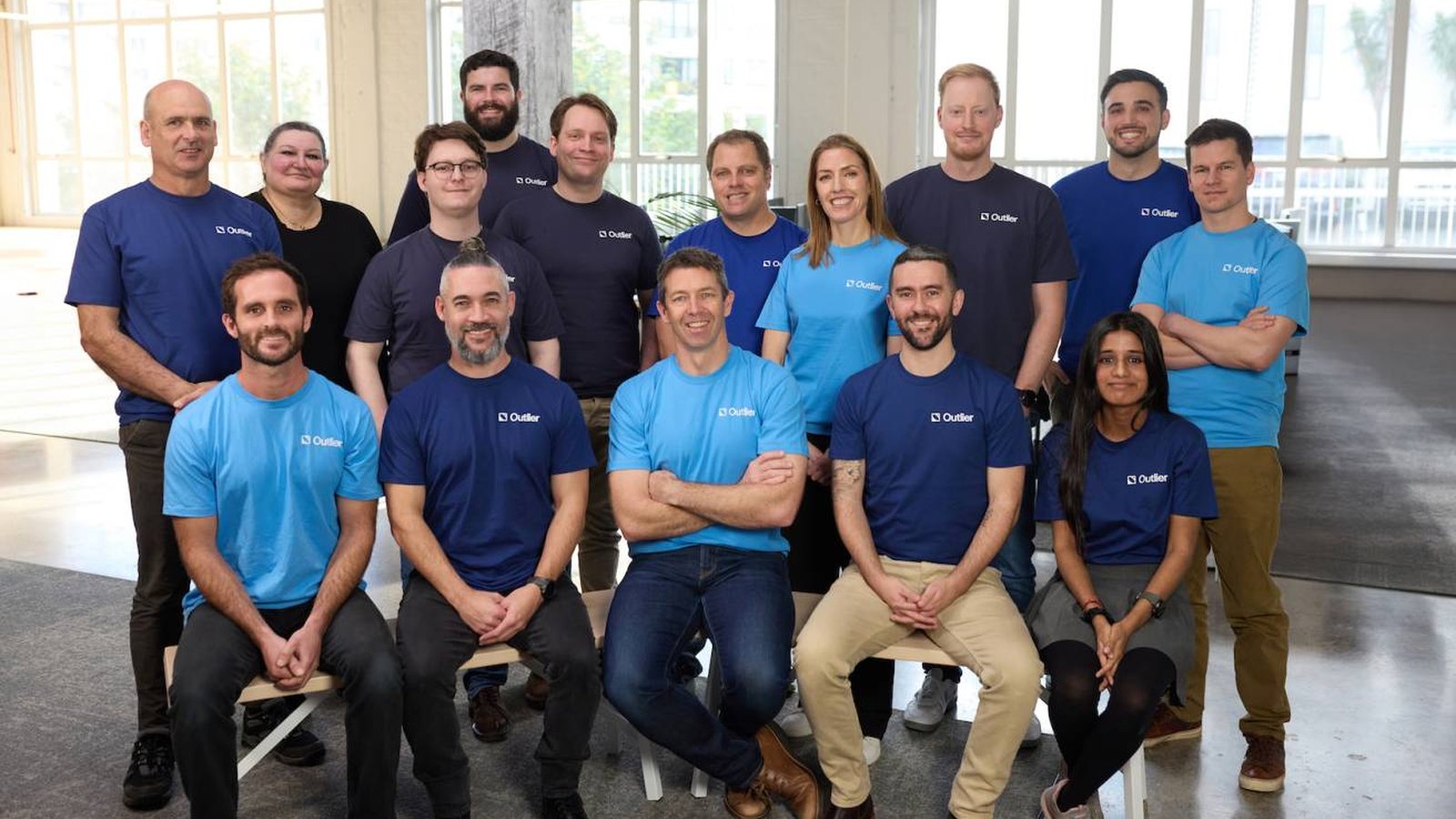
Auckland deep-tech company Outlier Space has put a founder-led New Zealand space story back in the business headlines after raising US$7.35 million, or about A$10.5 million, in pre-seed funding to build reusable capsules for microgravity manufacturing. The round was led by New Zealand venture capital firm GD1 and included Nova Threshold, Brian Cartmell, Airtree, Icehouse Ventures, Investible and Side Stage Ventures, according to Startup Daily and specialist space coverage. For an early-stage company, the size of the round is notable because it puts hardware, regulatory work and flight testing on the table before the business has a routine product in market.
Founder and chief executive Jamie France is central to the story. He is a Rocket Lab veteran with a background that also includes engineering work across Emirates Team New Zealand and other aerospace programmes. Outlier is not pitching itself as a drug maker or a semiconductor manufacturer. Its proposed role is infrastructure: customers would supply their research or manufacturing equipment, while Outlier would provide a reusable orbital capsule that can carry payloads to low-Earth orbit, host them in microgravity, and return them safely to Earth.
The commercial logic is tied to what happens when gravity stops dominating material behaviour. In microgravity, liquids, crystals, proteins and other materials can behave differently from the way they do on the ground. The company says that creates possibilities for pharmaceutical research, drug delivery, advanced materials, semiconductors and tissue models. The science is not new, but the access model is changing. The International Space Station has proved much of the research environment, while cheaper launch options and more private space infrastructure are opening a path for smaller commercial platforms.
Outlier is aiming for a first test flight in 2028, subject to engineering, regulatory and funding milestones. That timing matters for investors because reusable space hardware is expensive and unforgiving. The company needs to design a spacecraft that can carry customer equipment, survive launch, operate in orbit, and return through the atmosphere without burning up. It also needs to persuade overseas customers, likely concentrated in the United States and Europe, that a New Zealand-led platform can be reliable enough for high-value research.
The raise also shows how New Zealand's space sector is moving beyond launch services. Rocket Lab made the country credible as a place where aerospace manufacturing and operations can happen at global standard. Outlier is trying to turn that reputation into a broader industrial base: engineers, mission designers, payload specialists and investors building companies around the space economy rather than around one launch provider. That is why the founder angle matters. The story is not just a capital raise; it is a test of whether experienced New Zealand operators can form the next generation of export-focused space companies.
There are still major risks. Hardware businesses can burn capital quickly, space regulation can move slowly, and demand from pharmaceutical and materials customers will need to become contracted work rather than curiosity. But the funding gives Outlier enough runway to recruit, qualify its first spacecraft and prove whether New Zealand engineering can turn microgravity into a commercial service. If France and his team can meet those milestones, the company could become one of the more consequential founder-led technology stories to come out of Auckland this decade.