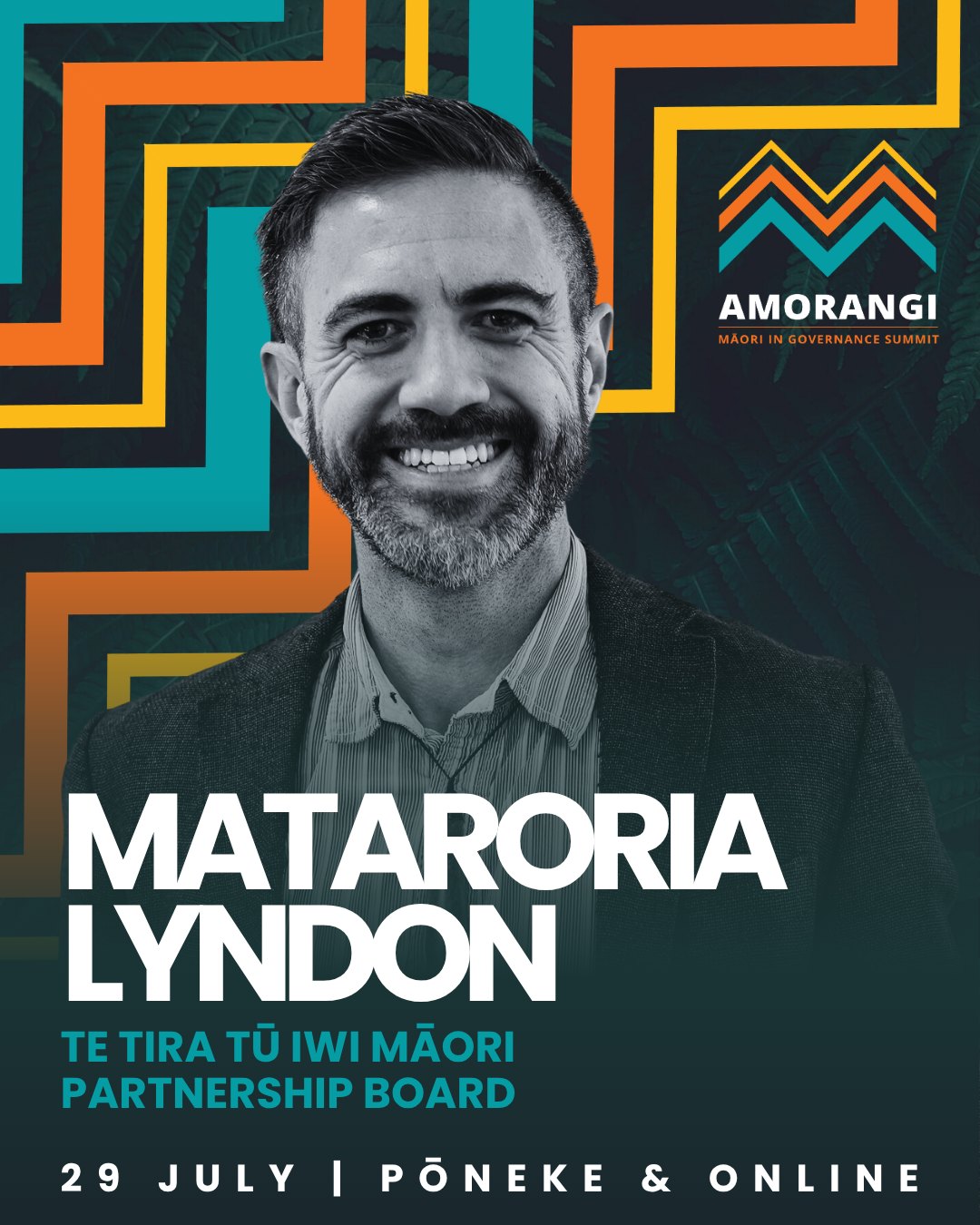
Dr Mataroria Lyndon's 29 July governance summit slot gives New Zealand business readers a current founder-focused leadership story that sits outside the usual funding and earnings cycle.
The Amorangi governance summit page says the Wellington event returns on 29 July 2026, with in-person and online attendance, a full-day agenda and Institute of Directors-recognised continuing professional development. The programme lists Dr Lyndon in a late-morning session on governing between worlds, followed by a panel with Dr Mereana Selby. The same source biography identifies him as a co-founder of Tend Health, one of New Zealand's largest primary care providers, and sets out board, health and academic roles across public, community and research organisations.
That combination makes the story more than a calendar listing. Founder leadership is often covered through capital raises, exits or product launches. This event points to a different part of the business system: how founders and operators move into boardrooms, policy-facing roles and long-term institutional governance. In health, technology and data, those decisions can shape how services are delivered long after a startup story has left the homepage.
For directors and executives, the commercial relevance is practical. New Zealand organisations are dealing with harder questions about data, digital services, trust, equity and cost. Boards need people who understand operating pressure as well as formal compliance. A founder who has helped build a scaled service can bring direct knowledge of customer experience, workforce strain, technology risk and the gap between strategic intent and frontline delivery.
The summit's wider agenda also matters because it frames governance as a capability that has to be developed, not simply appointed. The source page says the event offers practical insights from governance practitioners, cross-sector networking, on-demand replays and a way for attendees to seek employer approval for professional development. That is useful for emerging leaders who may be able to contribute but lack the established networks that often decide who gets board experience.
Dr Lyndon's biography supports a cautious, source-verified article because it lists specific roles rather than relying on promotional generalities. It says he has held ministerial governance appointments, currently serves on several boards and co-chairs a heart-health research centre. It also says his work focuses on governance, health equity, cultural safety, data and digital innovation. Those are the facts this article can safely use without inventing claims about what he will say on stage.
The founder requirement for today's Newsroom NZ pack is met by this story. Dr Lyndon is explicitly identified as a co-founder, and the current angle is a 29 July governance event where founder experience is connected to boardroom and public-interest decision-making.
For a national business audience, the takeaway is clear: New Zealand's next leadership challenge is not only creating more companies. It is making sure founder, operator and community experience reaches the governance tables where health, technology and investment choices are turned into durable systems.
The story also gives employers a practical reason to support governance development. A five-hour recognised CPD event is a low-risk way to expose senior staff to board-level thinking, especially when organisations need leaders who can translate values, data and delivery pressure into decisions.