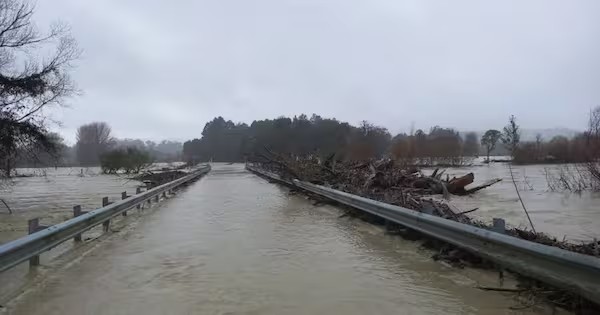
Hundreds of people in South Wairarapa are expected to remain isolated for days after storm damage washed out the vital Turanganui Bridge, turning the latest severe-weather system into a practical access crisis. 1News reported on Sunday afternoon that communities who relied on the lifeline bridge were again cut off by damage, and Wellington Scoop carried RNZ reporting that hundreds may be isolated after this week's storm washed out the crossing.
The weather significance is that the worst impact of a storm does not always end when the rain band moves away. Bridges, rural roads, riverbanks and slips can keep communities separated long after skies clear. For residents, the immediate issue is not a forecast graphic. It is whether food, medicine, school transport, stock work, jobs, emergency help and family care can move across damaged infrastructure.
The Turanganui Bridge story also shows how repeated events compound risk. The affected communities had reportedly dealt with bridge damage earlier in the year, when locals formed human chains to move food across the river. That history matters because resilience is not tested in one tidy incident. A community may be able to improvise once, but repeated washouts create fatigue, cost and uncertainty. People need to know whether the next heavy rain will again threaten the same access point.
MetService's thunderstorm outlook for Sunday said there was minimal risk of thunderstorms or significant convection from midnight Sunday to noon Monday. That is useful current information, but it should not make people dismiss the recovery phase. Minimal thunderstorm risk does not repair a bridge, reopen a road or make river margins safe. Weather services warn about incoming hazards; emergency management and councils then have to translate the damage into access plans.
For drivers, the lesson is to treat road closures and council advice as live safety information. A rural detour may look simple on a map but become impractical when other roads are wet, narrow or damaged. Floodwater and undermined approaches can be dangerous even when the surface looks passable. People should avoid testing closed roads and should keep trips essential until authorities confirm safe access.
For farmers and rural households, isolation brings a different set of decisions. Stock may need feed or movement, fuel may run low, and medical appointments or school routines can become complicated quickly. Communication lines, welfare checks and supply planning matter as much as the weather forecast. Local networks are often the first line of support, but they need official backup when isolation stretches beyond a day or two.
The public-infrastructure question is larger than one bridge. New Zealand has many rural routes where a single crossing or hillside road carries far more social value than its traffic count suggests. When those links fail, the cost is measured in emergency access, missed work, anxiety and community disruption. Climate volatility and ageing infrastructure make that calculation harder for councils already under rating pressure.
The immediate priority is safe restoration and clear updates for affected residents. The longer-term priority is a frank assessment of whether repeated storm damage is being managed as a one-off repair problem or as a resilience problem. South Wairarapa residents need more than sympathy after the next storm. They need routes that can keep communities connected when winter weather tests them again.