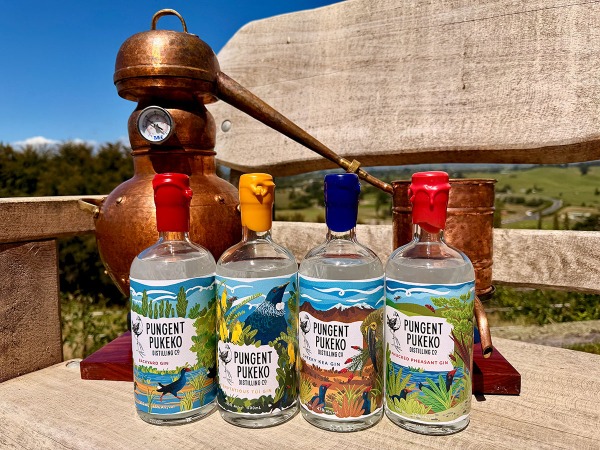
Pungent Pukeko has given New Zealand's food and drink sector a founder-led export story, winning gold at the World Gin Awards with a brand built from local botanicals, an unusual dairy-based spirit and deliberately offbeat positioning. Rural News Group reported this week that founder and executive director Jack Walters described the gin brand with the blunt line: We are not normal.
The founder focus matters because the award is not just another medal for a drinks label. It is a story about how a small New Zealand producer tries to stand out in a global gin market crowded with heritage bottles, celebrity brands, craft distilleries and polished lifestyle marketing. Walters appears to have leaned into difference rather than trying to mimic a standard premium-gin playbook.
Rural News Group said Walters credits local botanicals, a dairy-based spirit and bold branding for the result. Each of those choices carries risk. Local botanicals can make a product more distinctive, but only if they are used with balance rather than as a gimmick. A dairy-based spirit gives the brand a New Zealand primary-sector connection, but it also needs a clear explanation for consumers who are used to grain or neutral spirits. A bold name can cut through, but it has to be backed by flavour and quality.
The World Gin Awards recognition gives the brand proof that its unusual route has not come at the expense of credibility. Awards do not guarantee commercial success, but they can help a founder open conversations with distributors, retailers, bars and export partners. They also give customers a reason to try a bottle that might otherwise look too eccentric on a shelf.
New Zealand has had a strong run of food and drink validation recently, from Michelin's arrival to export-focused primary-sector stories. Pungent Pukeko sits in a different part of that landscape. It is not a fine-dining restaurant or a bulk export commodity. It is a founder-led branded product trying to turn local ingredients, humour and craft into something that travels.
That combination is useful for the wider drinks sector. The strongest small brands often know exactly what makes them specific. They do not only say they are premium. They give buyers a story, a sensory reason to care, and a name that can be remembered after a tasting table is packed away. Walters' comments suggest Pungent Pukeko understands that modern food and beverage consumers are buying identity as well as liquid.
There are still practical challenges. Award attention must be converted into production discipline, distribution, consistent quality and margin. A founder can get early attention through personality, but the business has to keep delivering once the novelty fades. For alcohol brands, responsible marketing and clear market positioning are also essential because humour cannot replace trust.
The gold medal makes the next phase more interesting. If Pungent Pukeko can turn a passion project into reliable demand, it will show how New Zealand's food and drink sector can produce more than raw ingredients or standard premium goods. It can produce founder-led brands with enough local character to be noticed overseas and enough product quality to justify the attention.