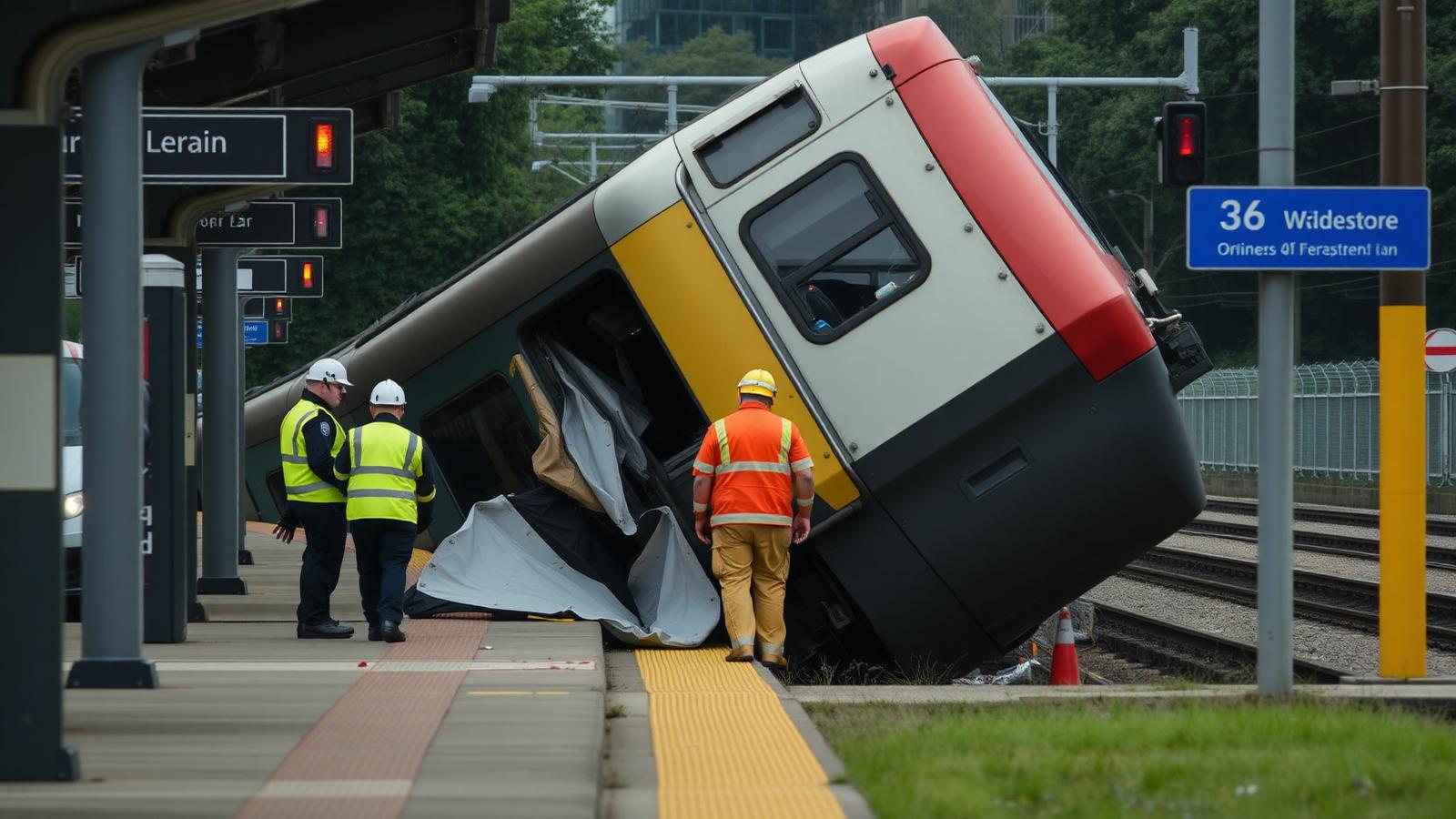
A passenger train derailment on Wellington's Johnsonville Line has become a national transport-safety story after the Transport Accident Investigation Commission opened an inquiry into the Saturday night incident. TAIC says the derailment happened north of Wellington at about 7.20pm on 6 June 2026 and involved a passenger train on the Johnsonville Line. The commission's public notice says the accident caused significant damage to the train, and local news feeds reported six people injured after the derailment between Box Hill and Khandallah.
The verified public facts remain limited, and that matters. A derailment is the kind of event that attracts fast speculation about track condition, driver action, signalling, train maintenance, speed, weather, slips and emergency response. None of those causes has been established publicly. TAIC's role is to investigate transport accidents and incidents for safety lessons, not to assign blame, so the safest immediate conclusion is narrower: a suburban passenger train left the rails, people were hurt, the train was damaged, and an independent safety inquiry has begun.
For Wellington commuters, the Johnsonville Line is not an abstract asset. It is a daily connection through a steep, constrained rail corridor serving northern suburbs and feeding into the wider capital network. When a train derails on that route, even outside the peak commute, the public impact reaches beyond the passengers who were on board. Families want to know whether the line is safe. Employers want to know whether workers can rely on the service. Disabled passengers, students and people without cars have fewer simple substitutes when a rail line is disrupted.
The incident also lands at a time when New Zealand is being asked to put more faith in public transport, not less. Councils and central government regularly point to rail as part of the answer to congestion, emissions, regional resilience and urban growth. That argument depends on trust. A serious incident does not mean a whole system is unsafe, but it does require a clear public account of what happened, what was checked immediately, and what will change if investigators find systemic risk.
TAIC's latest updates list several rail inquiries already in progress, including a passenger train disabled in a tunnel near Springfield on 30 May and a freight-train signal incident in Auckland released as a report on 5 June. Those are different events, but together they show how complex the rail system is. Passenger rail safety depends on vehicles, track, signals, maintenance planning, control rooms, emergency procedures, staff training and communication with passengers.
The Johnsonville inquiry should therefore be followed for its safety findings rather than for dramatic blame. The public needs answers on the condition of the track and train, the sequence before the derailment, passenger evacuation, injuries, service disruption and any urgent remedial action. Until TAIC and the operator release more detail, responsible coverage should avoid filling gaps with assumptions.
The immediate service value for readers is simple. Anyone affected by the derailment should follow official operator, police, emergency and TAIC updates rather than social media claims. Anyone with direct evidence, such as passenger video or eyewitness information, should provide it to investigators if requested. Wellington's rail network has to earn public confidence through evidence. The inquiry is the first step in doing that.