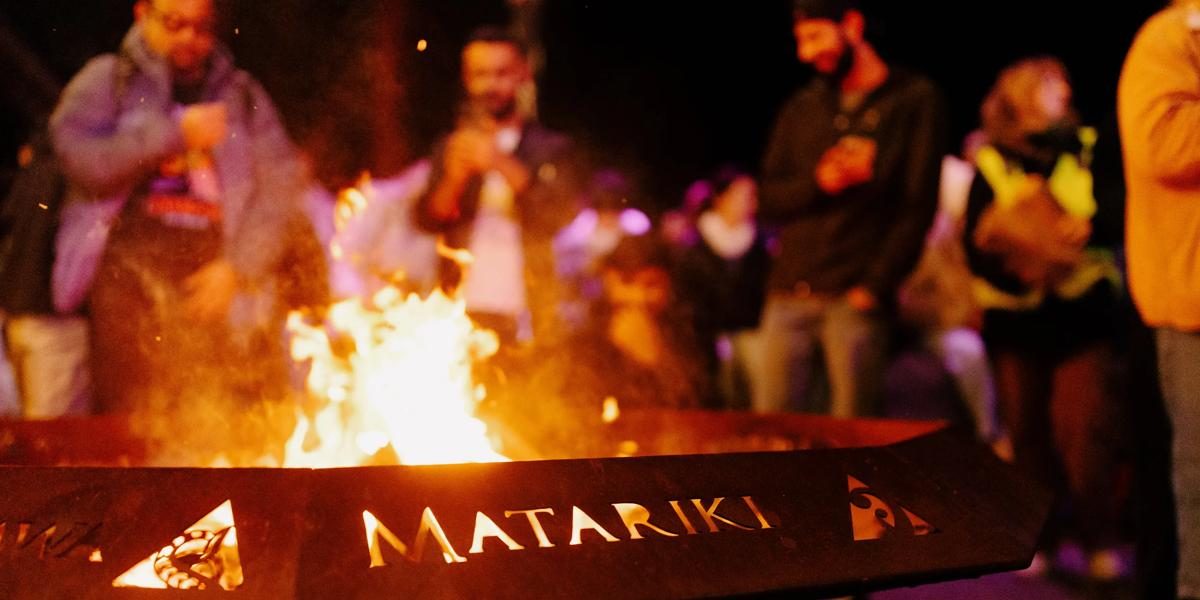
Wellington's Matariki Ahi Kā has confirmed a July waterfront programme that places fire, projection, performance and kai at the centre of the capital's Māori New Year events calendar. WellingtonNZ lists the free event for 9 to 12 July 2026 at Odlin's Plaza on the Wellington waterfront, running from 6pm for three hours each evening. The event page describes it as a whānau-friendly celebration featuring fire, projections, live performances, a ceremony for loved ones who have passed away, and kai courts with live music.
The event matters beyond the capital because Matariki has become one of New Zealand's most visible civic seasons. Since the public holiday was established, councils, iwi, venues, libraries, galleries and community groups have had to think carefully about how to mark the Māori New Year in ways that are public, respectful and locally grounded. Ahi Kā gives Wellington a distinctive version of that challenge by using the waterfront as a shared civic space.
The name itself carries weight. Wellington City Council notes that Matariki Ahi Kā is a celebration connected to Matariki and Puanga, with the event name gifted by mana whenua. That context matters because public events can easily become entertainment stripped of meaning. The strongest Matariki programmes hold remembrance, renewal, whānau, kai, art and astronomy together rather than reducing the season to a night market or a light show.
For families, the practical appeal is clear. A free evening event lowers the cost barrier at a time when household budgets are tight. The 6pm to 9pm timing gives people a manageable winter window, although visitors will still need to plan for weather, transport and warm clothing. The waterfront location also means the event can draw locals, domestic visitors and central-city workers into the same space, supporting nearby hospitality and public transport use.
The programme also sits alongside a wider national Matariki calendar. Auckland's Matariki Festival lists events beginning from 25 June and running through July, while other cities and cultural institutions are running their own programmes. That spread shows how Matariki is becoming a season rather than a single day. Wellington's contribution is not competing with those events so much as adding a capital-city version shaped by mana whenua, harbour geography and public art.
There are operational pressures behind the scenes. Outdoor winter events need weather contingencies, crowd management, lighting, security, accessibility, waste planning and clear communication. A free event can attract large numbers, especially if conditions are good. Organisers will need to keep information current so families know where to enter, where kai is available, what parts of the route are accessible, and what happens if wind or rain affects installations.
For Newsroom NZ readers, the useful takeaway is that Matariki Ahi Kā is now a dated event to plan around: 9 to 12 July, 6pm to 9pm, Wellington waterfront, free entry. The deeper takeaway is that Matariki programming is becoming part of how New Zealand cities express local identity. Wellington's fire, projection and kai programme gives the capital a public way to remember, gather and look forward in the middle of winter.