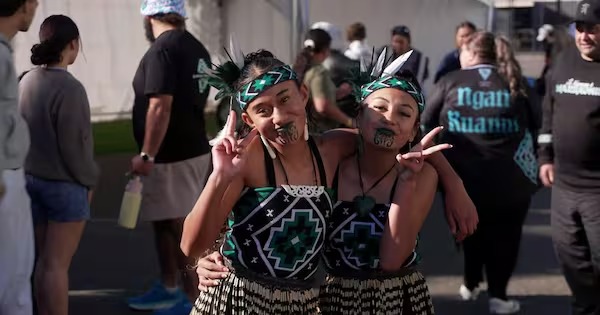
Te Tāwharau o Ngā Waka, the national secondary school kapa haka competition, is bringing more than 2000 students to Tauranga for a week-long event that organisers say has become a defining stage for young performers. 1News and Te Karere reported that 42 secondary school haka groups are competing, with a rule change increasing the maximum number of performers from 40 to 50.
The event is more than a school competition. Organising committee member Heywood Kuka told Breakfast that for many tamariki, kapa haka is part of life, and that the standard has lifted sharply over the past decade. He said that on day one, all 14 schools could potentially have been in the top group, showing how much quality has risen through competitions like this.
That matters because youth events often get treated as smaller versions of adult competitions. Kuka's description suggests the opposite. At secondary school level, he said, this is their Matatini. Some of the students also perform at Matatini, but for many this is the national stage where whānau, tutors, schools and communities see years of practice become a single performance. The pressure and pride are real.
The scale of travel is also part of the story. Kuka said schools had come from as far south as Invercargill and as far north as Te Hāpua, with planes, trains and automobiles needed to get performers to Tauranga. Accommodation, food and logistics are a major undertaking before supporters and whānau are even counted. That makes the event a cultural gathering, an education project and a regional visitor event at once.
The education angle is important. Kuka said kapa haka being an NZQA-accredited performance-based subject gives students the best of both worlds: they stand on stage while also earning part of their qualification through secondary schooling. That recognition helps shift kapa haka from extracurricular activity to serious learning, discipline and achievement.
Students and tutors interviewed by Te Karere gave the event its emotional core. A trio from Te Kapunga, the haka group from Te Haikura ā Kiwa in Manurewa, said they were proud despite mistakes and that they had built their bracket and left it on the stage. Tutors from Te Kupenga o Maruaonui and Cullinane College spoke about lifting to another level and including students' ideas in the campaign.
The format keeps the stakes high. The first three days are preliminary rounds, with the top three groups from each day advancing to Friday's sold-out finals. That means every performance has weight. A school can travel the length of the country and have only one chance to show months of preparation.
For Tauranga, the event is also a reminder of the economic and community value of cultural gatherings. Accommodation providers, food outlets and local venues all benefit, but the deeper value is visibility. Thousands of young people are performing te ao haka at a national level, with whānau watching and schools investing. That is an events story with cultural depth, not just a line in a calendar, and it deserves national attention while the week is still unfolding.