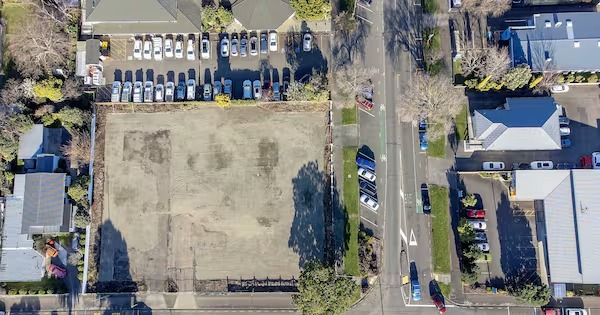
Horizons Regional Council's decision to use three vacant Palmerston North lots worth a combined $3.5 million as staff car parking is the kind of local-government story that deserves more than a quick laugh. Local Democracy Reporting, carried by 1News, reported that the council had spent roughly $30,000 laying metal on the 2218 square metre site after putting earlier building plans on hold.
On the surface, the story is easy to frame as an expensive car park. That is fair as far as it goes. Three central lots bought for $1.1 million, $1.6 million and $800,000 are now being used for staff parking while wider decisions wait. But the more useful question is how councils should judge temporary uses of valuable public land when uncertainty delays the original plan.
Horizons chief executive Michael McCartney said local-government reforms and uncertainty about future governance meant the council would not progress plans for the site as intended. He said the land had sat untidy for too long and that it was prudent to get it up to standard so it could be used in the meantime and potentially sold later. He also said the lots should be understood as a small part of the council's overall portfolio, not just a car park.
That explanation is not unreasonable, but it is incomplete. Public assets need a clear temporary-use test. What public benefit is being delivered while the final decision is deferred? How long is temporary? What alternatives were considered? Who gets access? What would trigger a sale, redevelopment or change of use? What is the cost of leaving the asset in its current state compared with the cost of activating it differently?
Staff parking may have a practical benefit, especially in a busy area where parking has been a long-running issue. The article noted that parking and a lack of spaces for people working, shopping or seeking health services had been a problem along that stretch of Victoria Avenue. If council staff parking frees other spaces for the public, that is a benefit worth explaining clearly.
But public land can often do more. Temporary uses might include paid public parking, food-truck spaces, event overflow, urban greening, pop-up community services, market stalls, accessible parking, bike parking, or a mixed arrangement that serves staff and the public. Not every option will be practical or affordable. The point is that the decision should be visible enough that residents can see the trade-off rather than assume convenience won.
The seismic context also matters. The regional council voted in August 2025 to demolish Regional House after a 2024 assessment identified parts of the building as earthquake prone. Safety measures were installed, and the building is required to be vacated or demolished before 2039. That kind of long horizon can leave councils tempted to make interim arrangements that slowly become normal.
The Palmerston North lots are a small part of one council's portfolio, but they illustrate a national habit. When the future is uncertain, temporary public-asset decisions can drift. Ratepayers do not need every answer immediately, but they do need the criteria. A $3.5 million site can be used temporarily. It should not be used casually.