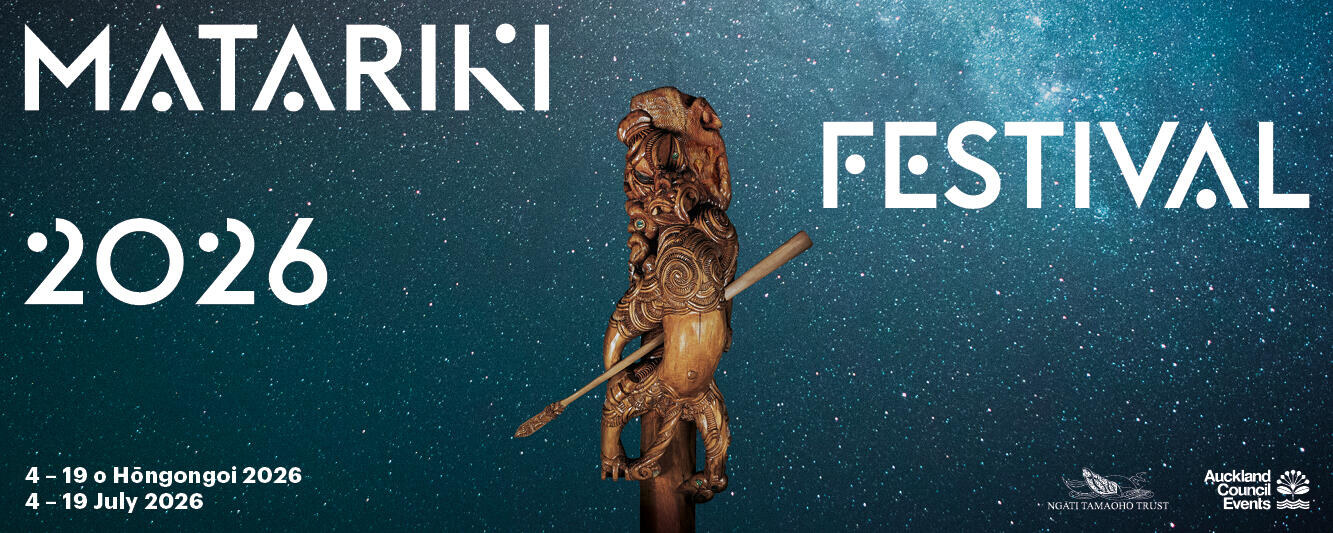
Aucklanders and visitors can now plan around a large Matariki Festival programme, with Auckland Unlimited announcing more than 100 free and low-cost events across Tāmaki Makaurau from 4 to 19 July. The 15 June programme announcement says Matariki Festival 2026 is presented by Ngāti Tamaoho in collaboration with Auckland Council Events, and that this is Ngāti Tamaoho's third and final year as iwi manaaki.
The scale matters because Matariki has become a season of public participation rather than a single public holiday. Auckland Unlimited says the programme includes community events, exhibitions, workshops, performances and activities across the region, anchored by three pou events. Those pou events are shaped by the maramataka and are intended to guide the festival journey while regional events give communities their own ways to reflect, connect and celebrate.
The first pou event, Matariki ki te Maunga, opens the festival on 4 July with a dawn karakia led by Ngāti Tamaoho to mark the rising of Matariki and welcome the Māori New Year. That opening signal is important. It places tikanga and iwi leadership at the centre of the programme rather than treating Matariki as a generic winter entertainment brand.
For families, the event range gives winter structure. July can be a difficult month for outdoor plans because of weather, short daylight and school-holiday costs. Free and low-cost activities help households participate without turning cultural celebration into another expensive ticketed obligation. Libraries, galleries, parks, community venues and performance spaces all become part of the wider calendar.
For visitors, the festival offers a way to understand Auckland through place and season. Matariki events can connect astronomy, remembrance, kai, storytelling, environmental care, art, music and learning. That mixture is distinctive to Aotearoa New Zealand, but it depends on accurate interpretation. The most valuable events will be those that help people understand the kaupapa, not only consume a performance or market.
The programme also matters for artists, educators and community organisers. A large citywide festival creates work, visibility and audiences for people whose practice may not always sit inside mainstream event calendars. Workshops and exhibitions can introduce audiences to mātauranga, local history, craft and performance in ways that endure beyond a single night.
Transport and accessibility will decide how inclusive the programme feels. A festival spread across a large region needs clear venue information, public-transport guidance, weather updates and registration details. If events are free but hard to reach or understand, participation narrows. The strongest public programmes make the next step obvious.
The broader cultural point is that Matariki is now embedded in New Zealand's civic calendar, but that does not mean organisers can become casual with it. Each year is a test of whether public celebration deepens respect and understanding. Auckland's 100-plus event programme gives the city a significant opportunity to do that. The task for attendees is to show up with curiosity and care, and to check official listings before travelling because event details can change.
It also gives schools, community groups and families time to plan before the July public-holiday period. That early notice is valuable because the best Matariki participation is rarely rushed. People need time to choose events, invite whānau, understand the kaupapa and make space for remembrance as well as celebration.