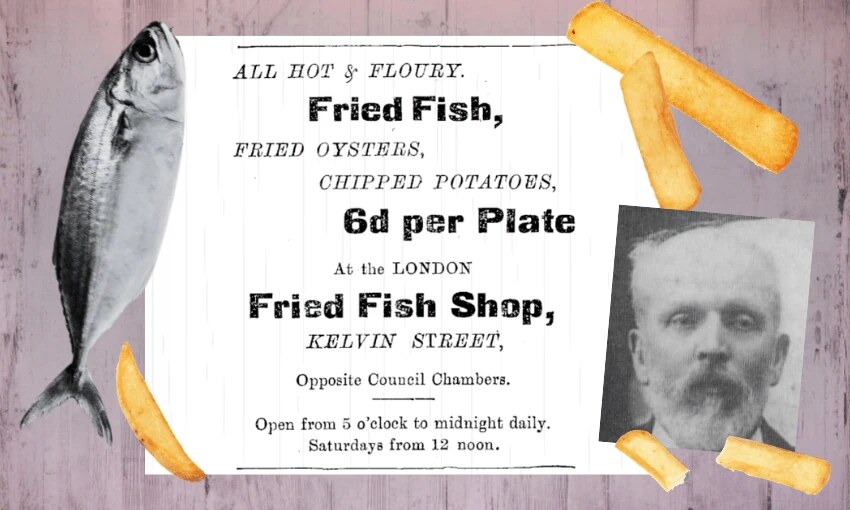
The Spinoff's new feature on James Henry Pomeroy has put one of New Zealand's most ordinary food rituals back into historical focus: fish and chips. The article identifies Pomeroy as a fishmonger and early figure in the arrival of fried fish and chips in New Zealand food culture, connecting a familiar takeaway meal to migration, work, coastal supply and the way local eating habits become national habits.
Food stories often chase novelty, but this one works because fish and chips are not novel. They are embedded in Friday-night routines, beach trips, school holidays, late work nights and small-town main streets. A wrapped parcel of fish and chips can be cheap, communal and easy to carry. That makes it culturally important even when it seems too ordinary to notice.
The Pomeroy story is also a reminder that national staples usually start as local business experiments. A fishmonger needs supply, customers, equipment, oil, potatoes, a place to sell and enough demand to keep the idea alive. If the food catches on, later generations forget the risk and remember only the habit. That is how many food traditions become invisible: they succeed so completely that people stop asking where they came from.
New Zealand's coastal geography helped the dish make sense. Fish was available, potatoes were familiar and a hot fried meal fitted working-class and family budgets. The combination could travel across suburbs and towns without needing fine-dining infrastructure. A fish-and-chip shop did not have to explain itself for long. People understood the offer quickly.
The story also fits a wider food-and-drink moment in 2026. Hospitality operators are under pressure from costs, labour, rent and cautious customers, while diners still want comfort, value and local identity. Fish and chips sit at the crossroads of those pressures. A good shop can be beloved, but it still has to manage seafood prices, oil costs, wages, packaging, rent and changing consumer expectations about quality and sustainability.
Sustainability is the modern layer that early operators did not face in the same way. Today's customers increasingly ask what fish they are eating, where it came from and whether the catch is responsible. A staple can stay familiar while the supply chain changes around it. The future of fish and chips will depend on whether operators can keep the meal affordable and comforting while responding to better information about fisheries and waste.
There is a social point too. Fish and chips are often eaten together rather than plated individually. People share scoops, pass sauce, argue over crisp pieces and eat from paper at parks, beaches and kitchen tables. That shared informality gives the meal a place in memory that a more polished restaurant dish may not achieve.
Pomeroy's story matters because it gives a name and a human path to something New Zealanders can otherwise treat as background. Behind every ordinary food habit is someone who supplied, cooked, sold or popularised it first. In that sense, the history of fish and chips is also a history of small business, appetite and the everyday ways a country learns what it likes to eat.