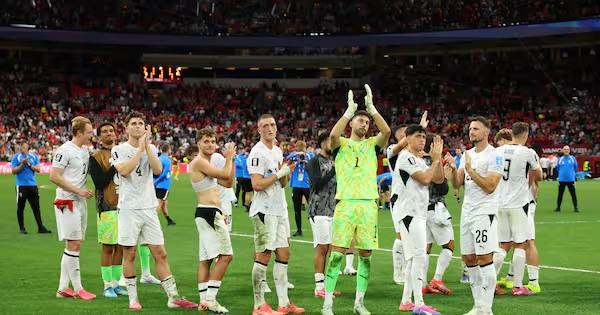
New Zealand's men's World Cup campaign is over after the All Whites were beaten 5-1 by Belgium in Vancouver, a result that turned a live qualification chance into a hard lesson in tournament finishing. 1News reported that the All Whites suffered the heavy defeat in their final group match, while Friends of Football said both sides needed a win to remain in the 48-team tournament and Belgium took control in the second half at BC Place.
The scoreline hurts because New Zealand had entered the final match with a visible route, however narrow, to extend the campaign. The earlier 2-2 draw with Iran and 3-1 loss to Egypt left Darren Bazeley's side needing a major result against a highly ranked opponent. That was always a difficult assignment. Belgium's individual quality, tempo and depth were likely to test New Zealand's structure even before the match began. Once the game opened up, the gap became obvious.
The All Whites should not be reduced to one poor result, but neither should the defeat be softened beyond recognition. A 5-1 loss in a decisive group game says something about game management, defensive resistance, bench impact and the difference between competitive passages and full-match control. New Zealand have shown at this tournament that they can score and unsettle opponents. The challenge is that the best teams punish every loose phase, and Belgium did that ruthlessly.
For supporters, the campaign produced more than disappointment. New Zealand scored in multiple group games and had moments that felt like genuine World Cup football rather than ceremonial participation. Eli Just's earlier goals, set-piece threat and periods of confident possession gave the side material to build on. But tournament football is not scored by encouraging signs. It is scored by points, goal difference and knockout places. On those measures, the All Whites fell short.
The practical question now is what New Zealand Football does with the evidence. The national team has to review selection depth, defensive transitions, midfield pressure, conditioning, travel management and the development pipeline that feeds future squads. A World Cup exit should not become a one-week debate about one result. It should become a detailed check of whether the domestic system is producing enough players who can live with elite pace for 90 minutes.
There is also a communication challenge. The federation and coaching staff need to acknowledge the margin honestly while protecting the useful parts of the campaign. Supporters can accept that Belgium are stronger. They are less forgiving when heavy losses are explained away as bad luck. Clear analysis builds trust because it tells players, clubs and fans what must improve.
The wider football opportunity remains. New Zealand's appearance at the World Cup gives young players a visible pathway, especially as football continues to grow across more communities. The campaign showed that the All Whites can take moments onto the global stage. The next step is making those moments last longer and cost opponents more.
For now, Belgium move on and New Zealand come home. The result is blunt. The lesson should be just as direct: the All Whites have moved beyond merely showing up, but the standard required to stay in the tournament is still higher than the level they sustained in Vancouver.