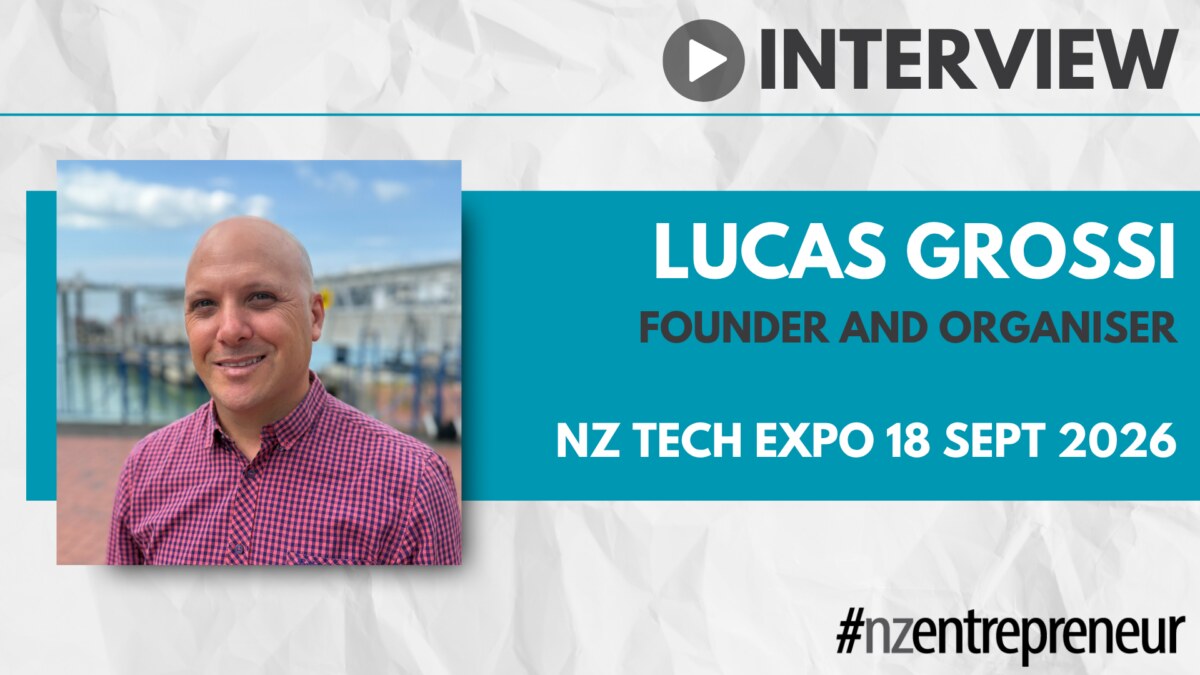
Lucas Grossi's NZ Tech Expo has become the strongest founder-focused business story for today's Newsroom NZ pack because it connects a named operator, a new national technology event and a practical market problem: how New Zealand founders get in front of buyers, investors and the public without leaving the country. NZ Entrepreneur's 22 June homepage feature says Richard Liew interviewed Grossi, founder and organiser of the inaugural NZ Tech Expo, which is scheduled for 18 September 2026 at Shed 10 in Auckland.
The event matters because New Zealand's technology sector often talks about scale, exports and productivity while founders still need ordinary, visible opportunities to meet customers. A conference or expo does not build a company by itself. But it can create a concentrated day where founders test language, show products, hear objections, collect leads and understand whether people outside their own network care about what they are building.
Grossi's role as organiser is important. Founder-led events tend to carry a different urgency from institutional calendar items. They are usually built around a perceived gap in the market: a missing showcase, a lack of practical connection, or a belief that an industry needs one room where customers, investors and builders can compare notes. That does not guarantee success, but it gives the event a clear business reason to exist.
For Auckland, Shed 10 is a useful signal. The waterfront venue puts the expo in a recognisable commercial and visitor setting rather than a narrow trade room. That helps because technology adoption is not only a software-industry question. Small businesses, corporates, public agencies, students, investors and service providers all shape whether new tools become real workflows. A wider audience can make the expo more useful than a closed founder meetup.
The timing also fits a broader 2026 business conversation. Companies are trying to understand artificial intelligence, cyber security, automation, digital sales, productivity and customer data while keeping costs under control. Many owners know they should modernise, but they are wary of hype. An expo gives vendors a chance to explain value in concrete terms and gives buyers a chance to compare claims side by side.
New Zealand's challenge is not a lack of clever founders. It is often the distance between prototype and paying market, especially for teams without large marketing budgets. Events can shorten that distance if they are curated well. The test will be whether NZ Tech Expo attracts enough serious exhibitors and visitors, not only social-media attention. Founders need conversations that lead to trials, partnerships and sales.
There is also a talent and confidence dimension. Students, early-career workers and people considering a move into technology need to see local examples. If the expo can show that New Zealand companies are building products with credible commercial ambition, it can help counter the idea that serious tech careers only happen offshore. That matters for retention and for the next wave of startups.
The risk is that a technology event becomes a showcase of buzzwords. Grossi and the organisers will need to keep the programme grounded in practical outcomes: who is building, what problem is being solved, what evidence exists, and how businesses can act after the event. If they do that, NZ Tech Expo can be more than another date in the business calendar. It can be a useful stage for founders trying to turn attention into momentum.