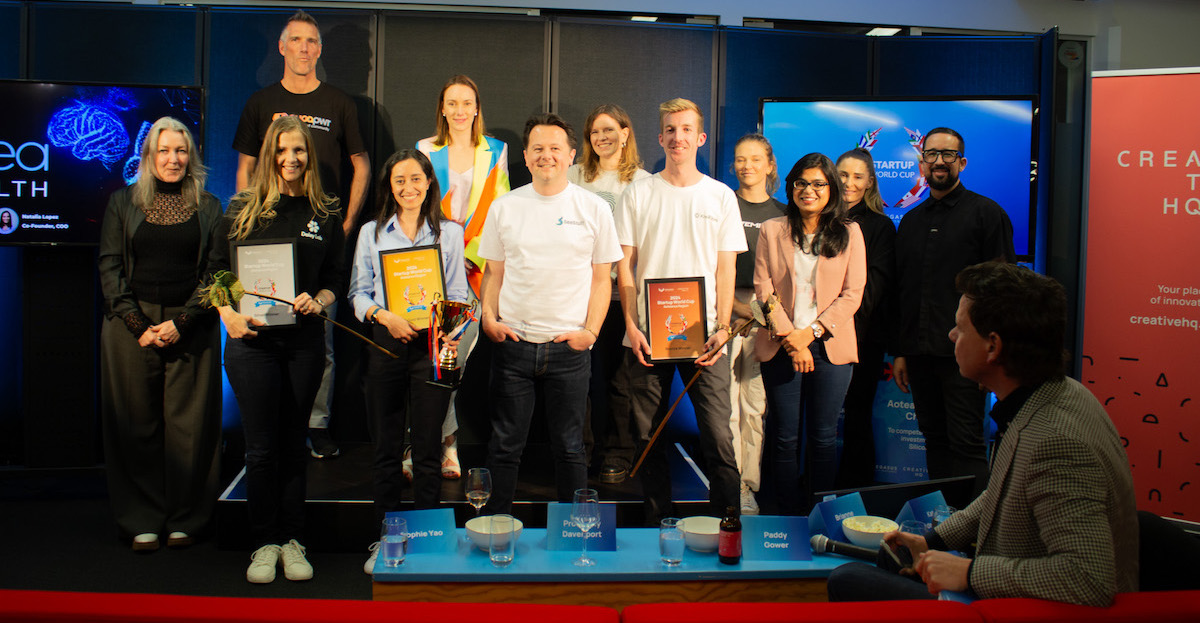
Creative HQ has put a fresh date in front of New Zealand startup founders, with applications for the Startup World Cup New Zealand Final open until 3 July and the top ten founders due to pitch in Wellington on 24 August. The programme is a founder story as much as a competition story. It asks early-stage companies to prove they are headquartered in New Zealand, globally ambitious, below Series B, and able to explain a credible advantage to investors and the wider innovation community.
The Wellington final matters because founder visibility is still one of the hardest gaps in the New Zealand business system. Capital is limited, specialist customers can be overseas, and many founders need to be taken seriously before they have the revenue profile of an established exporter. A live pitch event does not solve those problems by itself, but it can concentrate attention. Investors, advisers, talent and media are in the same room, and that room can compress months of introductions into one evening.
Creative HQ says the overall winner receives flights and accommodation to San Francisco to pitch on the global Startup World Cup stage, where the grand prize is a US$1 million investment opportunity. That international pathway is the hook, but the local process may be just as useful. Shortlisted applicants are interviewed through July, a top ten is chosen by 20 July, and founders get pitch practice and coaching before the final. Those steps force a team to sharpen its story, market sizing, traction evidence and assumptions.
The founder examples are useful. Creative HQ points to Scentian Bio, the 2025 New Zealand winner, which later raised $7 million and earned national media attention after representing Aotearoa internationally. It also points to Kitea Health, whose 2024 pitch was followed by clinical trials, a $10 million funding round and stronger recognition for deep-tech innovation. Those cases do not guarantee the same outcome for the next winner, but they show why a pitch-stage credential can matter.
For the wider economy, the event sits inside a familiar challenge. New Zealand wants more high-value companies, but it cannot rely only on the few firms that are already visible. It needs a pipeline of founders who can test ideas, raise capital, hire early teams and build overseas customer channels without leaving the country too early. A national pitch competition is one modest mechanism for finding and pressure-testing those teams.
The risk is that pitch events can reward polish over substance. A good founder can tell a clear story, but a clear story is not the same as a durable company. Judges and investors need to look past confident language and ask about customer evidence, regulatory risk, margins, defensibility, team capability and whether the company can scale from New Zealand without becoming disconnected from its base.
Still, the application window gives founders a practical reason to act now. Teams sitting on a prototype, early revenue, a research breakthrough or a niche product with global potential have a deadline and a test. Even founders who do not win may leave with a sharper pitch and a better network. In a cautious funding environment, that is useful.
The business signal is therefore clear: founder-led growth is not waiting for perfect conditions. It is being built through deadlines, rooms, questions, coaching and the discipline of explaining why a New Zealand company deserves attention beyond New Zealand.