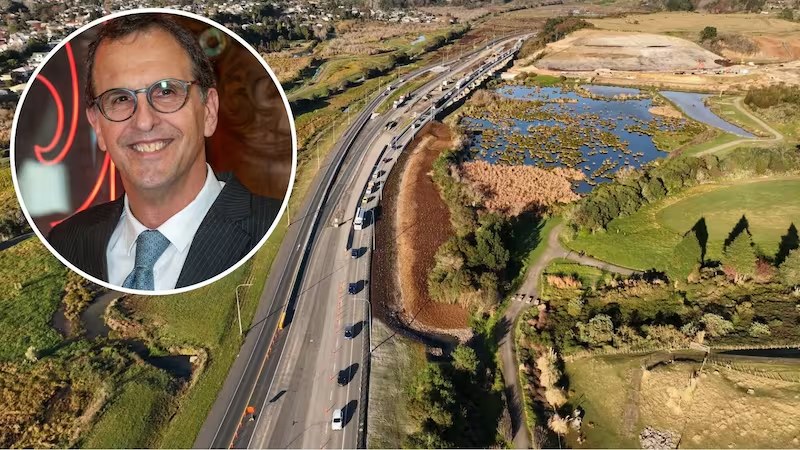
National's pledge to fully fund an $800 million Christchurch motorway and Woodend bypass has reopened a Bay of Plenty argument about tolling, regional fairness and who pays when major roads are built.
Tauranga councillor Rick Curach told Local Democracy Reporting the Christchurch promise felt like another slap in the face after decisions to toll the Takitimu North Link. National leader Christopher Luxon had said the party would fully fund the Belfast to Pegasus motorway and Woodend bypass if re-elected, while Tauranga faces new tolls on a project locals were once told would be funded from central transport revenue.
The comparison is politically sharp because both projects are framed as major growth and congestion investments. Curach said the Christchurch project was similar in cost, benefits and traffic volumes to the toll-funded Tauranga route. His complaint is not that Christchurch should miss out. It is that one region appears to be getting a toll-free build while another is asked to keep paying at the gate.
Tauranga already has two of the country's three toll roads, Takitimu Drive and the Eastern Link. The Takitimu North Link is also set to be tolled once it opens in 2028. Other new highways, including Penlink and Ōtaki to the north of Levin, are also expected to use tolls, although the Christchurch highway and bypass may still be tolled for maintenance.
The local opposition is not marginal. NZ Transport Agency consultation on the Takitimu North Link proposal received 2317 responses, with 71% saying the costs should be met in other ways and only 12% unconditionally supporting the proposed bill. Curach also pointed to analysis suggesting tolling could significantly reduce traffic volumes on the new road, raising the practical question of why a large project should be built if many commuters keep using the old route to avoid charges.
The maintenance issue adds another layer. Once the new motorway opens, NZTA would transfer the existing state highway to council ownership, meaning ratepayers could inherit maintenance and renewal costs for a road that still carries heavy use. Curach said that could become a significant burden for the community.
This is the kind of regional argument that can cut through during an election because it is concrete. Voters may disagree about transport ideology, but they understand a toll bill, a ratepayer burden and the feeling that another city has received a better deal. For Christchurch, the promise is a commitment to long-debated infrastructure. For Tauranga, it has become evidence that national transport funding rules can feel inconsistent when applied place by place.
The next useful answer from the major parties is not only whether a specific road will be built. It is what principle decides when a road is paid for from fuel taxes and road-user charges, when it is tolled, and when a local council inherits the old route. Without that principle, every new motorway promise risks becoming a fairness fight somewhere else.