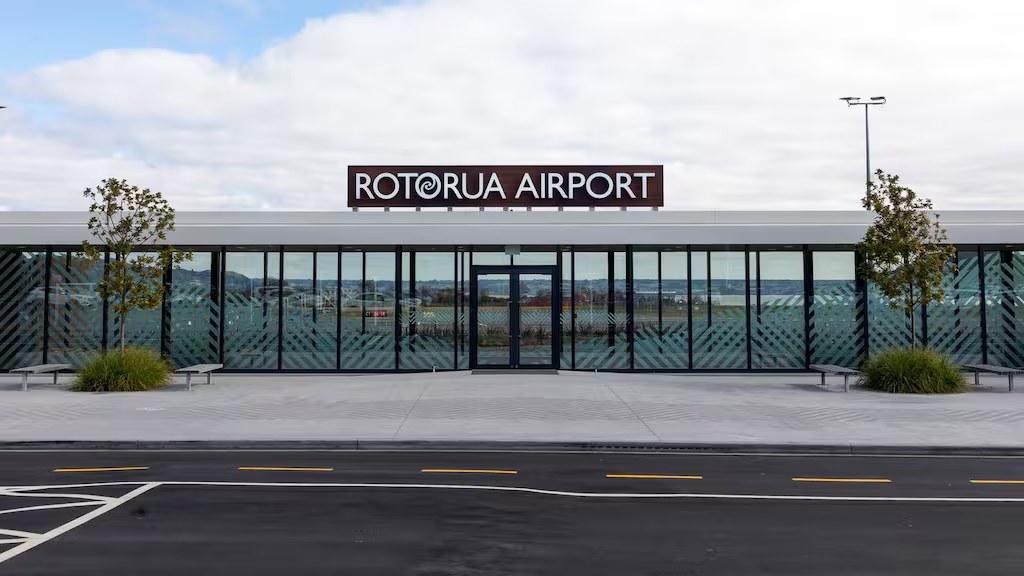
Rotorua Airport’s objection to a neighbouring Māori immersion school expansion has put two public-interest goals into the same planning file: growing kaupapa Māori education and protecting aviation safety around a regional airport.
Local Democracy Reporting, carried by 1News, reported the airport has opposed plans by Te Kura Kaupapa Māori o Te Koutu to expand near the airport. The objection centres on safety, noise and land-use compatibility, with the airport arguing that growth beside flight paths could create long-term operational issues.
For the kura, expansion is a response to education demand. Māori immersion schools are not easily substituted by a generic classroom somewhere else, because language, whānau connection, tikanga and community trust sit at the centre of the model. When roll growth arrives, finding the right land can be difficult and emotionally charged.
For the airport, the issue is future-proofing. Aviation operators tend to resist sensitive uses close to runways because once homes, schools or childcare facilities are established nearby, noise complaints and safety concerns can constrain airport operations later. A planning decision that feels local today can shape a city’s transport infrastructure for decades.
The tension is familiar in growing cities. Schools, housing and community facilities need land where people can reach them. Airports and industrial infrastructure need buffers that stop ordinary daily life being placed too close to risk, noise or heavy movement. The hard part is that both arguments can be true at the same time.
Rotorua’s case also carries a cultural dimension. A kura expansion is about more than extra desks. It can support language revitalisation, local identity and whānau access to education that reflects their values. Any planning process that treats that as just another institutional building risks missing why the proposal matters.
The next step should be evidence rather than slogans: flight-path mapping, noise contours, emergency planning, traffic effects, realistic alternative sites and the cost of mitigation. If conditions can reduce risk, they should be tested. If the site is fundamentally wrong, the community needs a credible pathway to a workable alternative.
What should not happen is a slow planning fight that leaves the school in limbo and the airport uncertain. Rotorua needs both strong regional connections and strong kaupapa Māori education. The decision will show whether the planning system can hold both needs carefully enough to reach a durable answer.